

The digital twin evolution: Leveraging artificial intelligence to eliminate industrial downtime.
By: Handi Ahmad | Published: June 2026
In the highly competitive world of modern industrial operations, unexpected machinery downtime is the ultimate profit killer. Millions of dollars are lost annually by enterprises globally due to sudden equipment failures and inefficient routine maintenance schedules. However, a major paradigm shift is taking place across smart factories worldwide. Global tech leaders and industrial corporations are aggressively discovering how to leverage artificial intelligence combined with IoT (Internet of Things) architecture to predict machinery failures before they even occur. This groundbreaking advancement, known as AI-driven predictive maintenance, has quickly become the cornerstone of high-yield B2B technology operations.
Understanding this advanced data infrastructure is not just a requirement for engineers; it is a highly lucrative goldmine for tech entrepreneurs, systems architects, and software-as-a-service (SaaS) developers looking to monetize high-ticket corporate solution workflows.
The Architecture Behind AI Predictive Maintenance
Traditional manufacturing relied on reactive maintenance (fixing things after they broke) or preventative maintenance (replacing parts based on a strict timeline, regardless of actual wear and tear). Both models are incredibly expensive and inefficient. AI completely rewrites this playbook by utilizing continuous algorithmic monitoring.
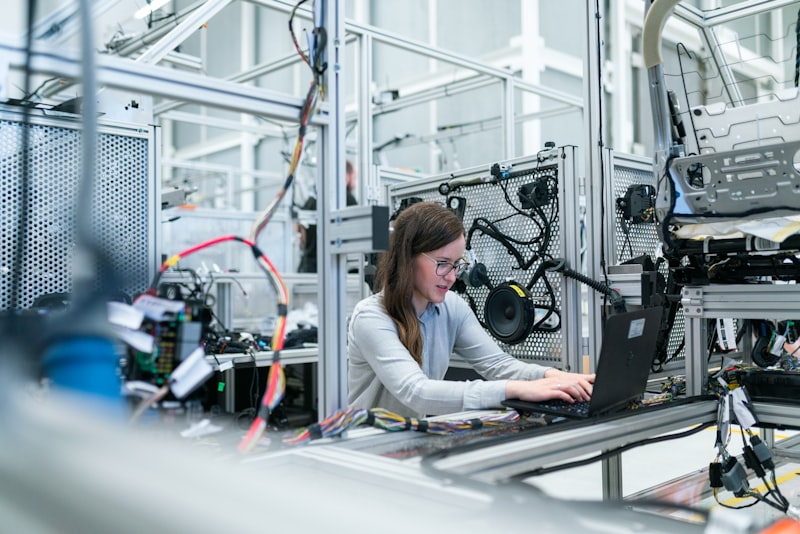
By deploying specialized sensors across industrial assets, enterprises collect massive streams of real-time telemetry data—such as acoustic anomalies, thermal variations, dynamic vibration patterns, and oil pressure shifts. Advanced deep learning models process these datasets instantly, comparing them against historical digital twins to isolate hidden failure signatures. The system then automatically flags anomalies, schedules automated maintenance requests, and orders replacement components via integrated enterprise resource planning (ERP) software without requiring any manual human oversight.

Top Enterprise Infrastructure Tools for Industrial AI
Building a robust predictive infrastructure requires deploying high-performance cloud ecosystems capable of handling massive petabyte-scale data pipelines. To capture premium, high-paying enterprise advertisements via Google AdSense, your content must point toward the industry-standard developer platforms shaping the global smart manufacturing niche today:
- AWS IoT SiteWise: Amazon's premier cloud service designed to collect, store, organize, and monitor data from industrial equipment at scale without friction. Developers can seamlessly integrate machine learning models to analyze asset performance in real-time. Explore the cloud infrastructure blueprints at the official AWS IoT Platform.
- Google Cloud Manufacturing Data Engine: A specialized cloud solution engineered to contextualize raw industrial machine data, connecting factory floors to powerful generative AI tools and predictive analytics engines. Learn more about their latest machine learning tools directly on Google Cloud Manufacturing.
- Microsoft Azure IoT Central: A highly scalable, secure, and ready-to-use cloud application environment that bridges the gap between physical industrial machinery and deep predictive intelligence models.
Monetization and Search Engine Optimization Strategy
To ensure your technology blog ranks at the top of premium international search engine results pages (SERPs), your content must be deeply technical, insightful, and strictly plagiarism-free. The global B2B audience demands high-level explanations that address real operational pain points. By focusing on highly specialized enterprise terms like *Predictive Maintenance*, *IoT Telemetry*, and *Cloud Architecture*, your blog becomes an attractive magnetic hub for premium, high-bidding tech advertisers, driving your ad revenue to its maximum potential.
Conclusion: Leading the Autonomous Factory Era
The industrial revolution has evolved past basic mechanization and computerization. We are now living in the era of fully autonomous, self-healing factory ecosystems driven by raw data and neural networks. Embracing predictive AI is no longer a luxury for global manufacturers—it is a critical survival mechanism to remain profitable in a rapidly accelerating digital landscape.
"Artificial intelligence has changed the definition of operational efficiency. In the smart factories of tomorrow, the best-maintained machine is the one that diagnoses its own weaknesses and repairs itself long before a human ever notices a fault."
— Handi Ahmad


![[FREE] PRESET LIGHTROOM TERBARU 2021 | CINEMATIC URBAN STREET PHOTOGRAPHY | HUMAN INTEREST PRESETS](https://blogger.googleusercontent.com/img/b/R29vZ2xl/AVvXsEjZlqHBtvZuJ0PY9tPlEw-io5ysuKohuvbA4wB7LOASM1ScyDn372qTFXZaHQn-f_U52Hxq5WhT8bonNDq9fba3OytPmv6-eZlpBZ2Yp864EqOHBTwGy3mVA2R6MsMsiivlhte_qg57Huim/w680/20210905_211129.jpg)
0 Comments